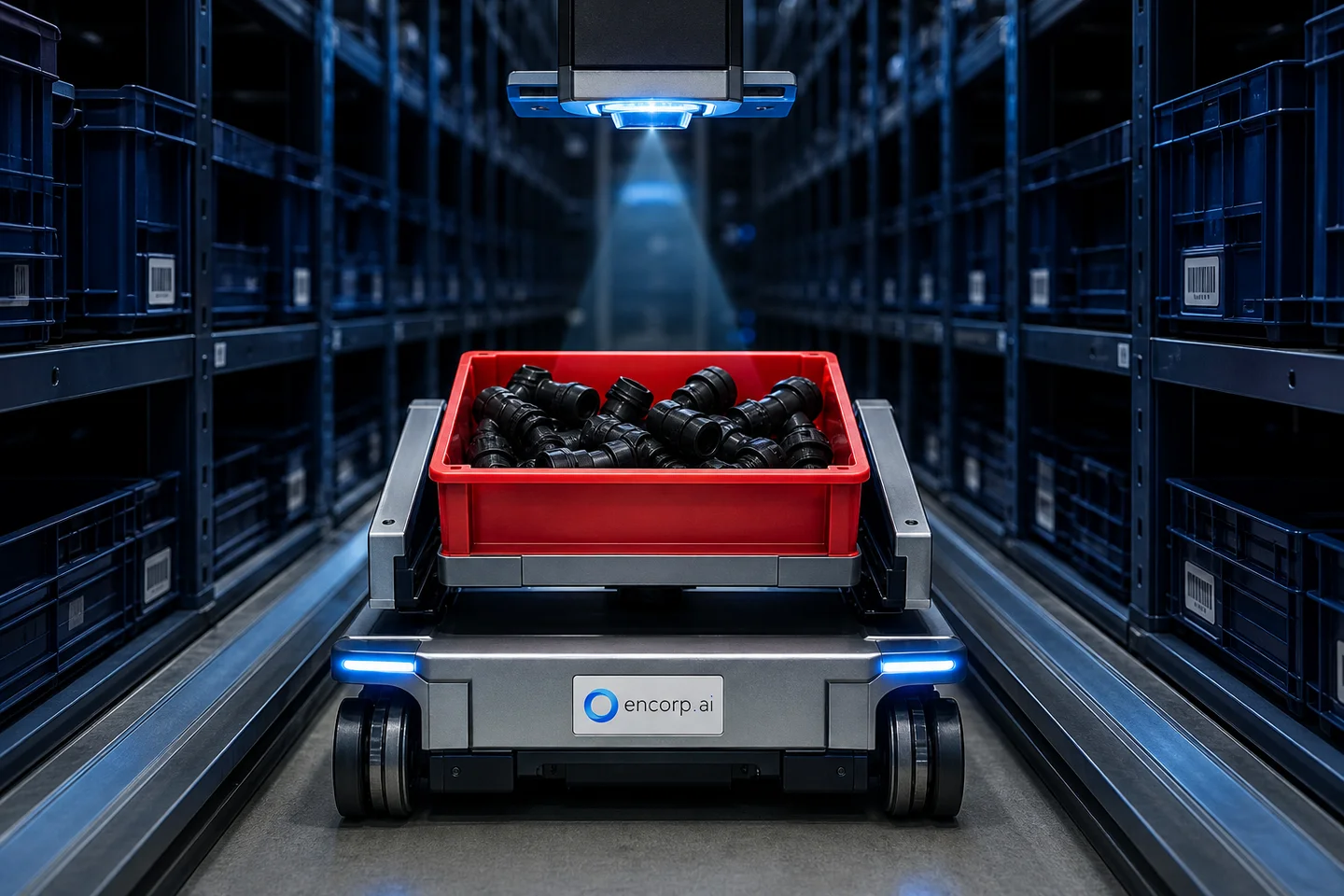
Teklas Plans an Automated Warehouse in Kardzhali. Is Your Stock Data Ready for Automation?
If your warehouse depends on someone who remembers which bin was moved, the first automation test is whether the system can find that bin without their help. A project planned by Teklas Bulgaria in Kardzhali gives manufacturers a reason to ask that question.
On 26 November, Bulgaria’s Ministry of Economy, Investments and Industry announced that it had awarded the project a Class A investment certificate. The €5 million project in the city’s South Industrial Zone includes a robotic warehouse and an automated workshop making plastic connectors for automotive applications. It is expected to create 50 jobs. These figures describe the planned investment. The announcement describes industrial automation and gives no details on the use of AI.
Where warehouse automation starts
Imagine an ERP record showing 200 components in one location. On the shelf, 180 are ready to use and 20 are held for inspection. If the system stores only a total, moving parts faster will not get the right batch to production. The process needs separate stock statuses, a traceable movement history and a named person who can release held components.
Standard integrations and validation rules can handle predictable movements. AI may help when the input varies. For example, it can suggest a match between a supplier’s delivery note and an internal item code. An uncertain match goes to a person before inventory changes.
Three checks before a pilot
- Trace a batch from receipt to production. Identify where its quantity, location and status change and which system records each event.
- Review a week of exceptions. Include damaged labels, partial quantities and batches on hold. Document who resolves each case and where the decision is recorded.
- Measure current performance. Record the time between request and delivery to the line, as well as the number of incorrect batches. Compare the same measures after the pilot.
At Encorp, we scope a pilot around one workflow, check how its systems share information and agree when work should go back to a person. If you’re connecting warehouse, ERP and production systems, see our approach to business process automation and the broader Encorp AIM implementation method.