ChatGPT Business Hub: Decide Who Owns Your Profile Before Anyone Claims It
Since 10 November, a company can claim its own profile inside ChatGPT. OpenAI launched Businesses in ChatGPT in beta: through a tool called Business Hub, a verified business can update its details, upload a product feed with prices and availability, and see how often ChatGPT mentions it and how many people click through to its website. OpenAI says ChatGPT has 1.2 billion weekly users, and Reuters reported the launch the same day.
Most of the coverage focuses on the visibility part. The detail I would look at first is a different one: the profile is claimed by a person, from a ChatGPT account, after that person passes an identity check. Whoever does it first becomes the admin of how your company appears in ChatGPT. That decision deserves five minutes of thought before someone in marketing does it on a Friday afternoon.
What you can actually do from Bulgaria today
OpenAI's wording is that any eligible business located where ChatGPT is available can claim its profile. The OpenAI help article then narrows it down. Availability depends on the business's location and type. Local stores and restaurants can, for now, claim only an existing U.S. listing. Business Agents, the chat assistant a company can publish inside ChatGPT, are available only to eligible e-commerce and online service businesses in the U.S.
Two European teams went through the flow on launch day and wrote up what they saw. TKM Studio, testing from Madrid, found that a business with a physical location went to a waitlist, the online store route showed a form, and the "service" option was marked "Coming soon". Tilio in the UK described the same three options. We have not tested the flow from Bulgaria, so treat this as a reasonable expectation, not a confirmed result: a Bulgarian online shop will probably be able to start a claim now, while a consultancy, clinic or B2B service firm will most likely have to wait.
That still leaves a lot of companies in scope. And the waiting ones have time to do the boring part properly.
The profile belongs to whoever claims it
Here is how the process works, according to OpenAI's own help page:
- You sign in to ChatGPT, open Business Hub, find your business and confirm which ChatGPT account will manage it.
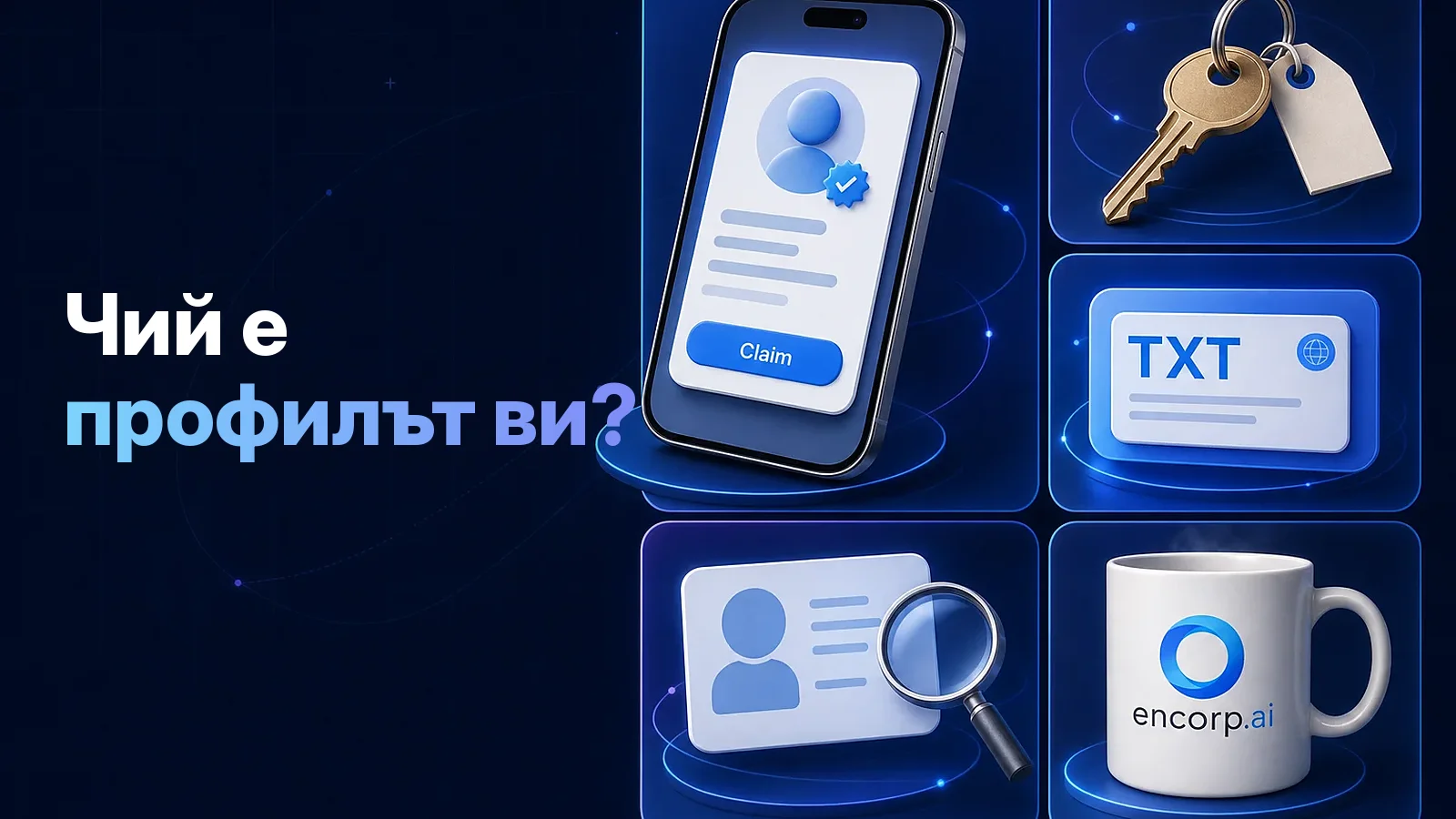
- You verify the link to the business by business phone, business email, a DNS TXT record on your domain or a Shopify connection.
- Before you can publish changes, view insights or connect a product feed, you must also pass identity verification with Persona. That can require a government-issued ID, business registration details and proof that you are authorized to represent the company.
- The admin who claimed the business can then add teammates and give an agency access. If the business was claimed inside a ChatGPT workspace, invitees may need to be members of that workspace.
Two more details matter. Only unpublished draft profiles can be deleted, and OpenAI Support says it cannot delete, unpublish or hide a published profile as part of a setup or ownership request. And if someone else has already claimed your business, the way back is a dispute through the profile menu, with a fresh Persona check.
Put together, this means the first claim sets the ownership structure. A hypothetical example: a Bulgarian online shop for kitchen equipment. A marketing specialist sees the news on Tuesday, claims the profile from her personal ChatGPT account, verifies with her own ID card and uploads the product feed. In March she leaves. The profile, the insights and the right to invite people sit with her account. Nothing illegal happened and nobody acted in bad faith, but the company now has to ask a former employee for access or go through a dispute.
The fix is simple and costs nothing if it happens before the claim:
First, claim from a company account. If you have a ChatGPT Business or Enterprise workspace, claim the profile there, so that access follows the workspace and not a private login. If you don't, at least use an account on a company email address that someone else in the company can recover.
Second, choose on purpose the person who passes the identity check. Persona verifies a real person who represents the company. In most Bulgarian companies that should be the manager or someone with a clear written authorization, not whoever was fastest.
Third, use domain verification when you can. A TXT record on your domain proves control through your IT setup, not through one person's inbox. It also forces the request through whoever manages DNS, which is a natural point to record who claimed what and when.
Finally, write it down. One line in your register of systems and accounts is enough: which account owns the ChatGPT profile, who is admin, who has access, which agency was invited. If you already keep a list of AI tools for governance, this is the same list.
What the new metric measures, and what it does not
The insights are the part many marketing teams have been waiting for. For the first time, ChatGPT itself reports something about your visibility, instead of you guessing from manual prompts. The help article is precise about what is counted, and it is worth reading closely:
- Insights cover the last 28 days.
- For an online business, a mention counts when ChatGPT references your website. Your brand name appearing in an answer without your website does not count.
- Discovery topics are grouped themes from answers that mentioned or cited you. They are not prompts and do not measure customer intent.
- A blank metric does not mean zero. It can mean the activity is below the reporting threshold or still being collected.
My reading is that this is a citation counter, not a reputation monitor. If ChatGPT regularly says your company's name but takes its facts from a marketplace, a comparison site or a news article, Business Hub may show you very little. That is useful in its own way: a large gap between how often you are named and how often your own site is cited tells you that other sources are describing you.
It also connects to a decision many companies made in a hurry. OpenAI's crawler documentation says that sites blocking OAI-SearchBot will not be shown in ChatGPT search answers, apart from navigational links. If your robots.txt blocks it, you are asking for a profile in a place where your website cannot be cited. We wrote about the different AI bots in robots.txt last week; it is worth checking that line before you start reading the new insights.
What claiming does not change
OpenAI states plainly that claiming does not guarantee higher placement or sales and does not give you control over ChatGPT's independent recommendations. Advertising does not influence those answers either, and sponsored placements are labelled separately. Updated details go through review and may take time to appear, and ChatGPT may still use other sources when it answers questions about you.
So the profile is a correction channel and a measurement tool. It is not a ranking lever. What decides whether ChatGPT recommends you is still what it can find and trust: your own pages with clear, current facts, and what others write about you. That is the same work we described in our piece on how AI answers change the rules of search, and Business Hub now gives you a first, partial way to see whether it is paying off.
A sensible order for this week
If you sell online, claim the profile, but decide the account and the person first, then verify through the domain if your setup allows it. If you are a service company and see "Coming soon", use the wait to check robots.txt, make sure your main pages state clearly who you are, where you work and what you offer, and decide now who will own the claim when it opens. In both cases, do not read too much into the first month of numbers. Twenty-eight days of partial counts with reporting thresholds are a starting point, not a verdict.
If you want a second pair of eyes on who should own AI-related accounts and tools in your company, that is a normal part of an AI governance setup, and you can reach us here.