An AI Agent in WhatsApp for Bulgarian Lawyers: What to Check Before You Say Yes
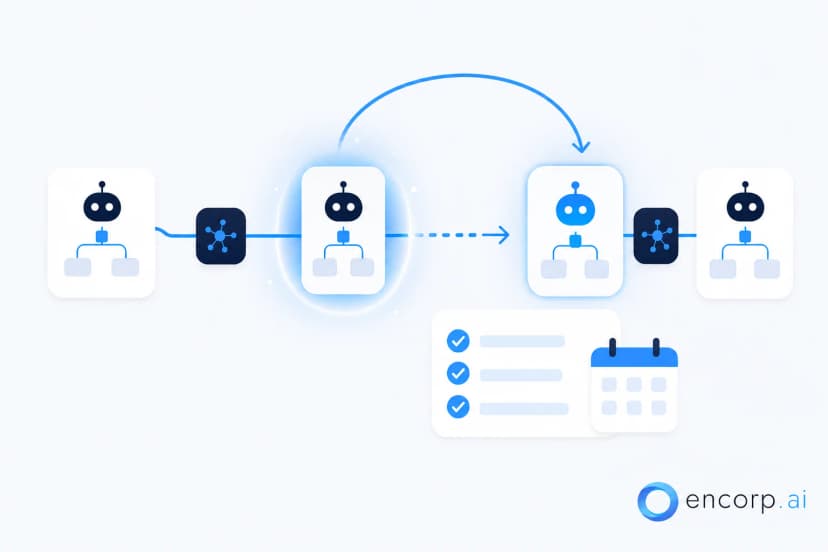
On 10 November, Lexroom launched lex in Bulgaria, an AI agent for lawyers that lives inside WhatsApp. Lexroom is the European legal AI company that bought the Bulgarian "Praven Intelekt" in September. The pitch is easy to picture: between two hearings, a lawyer asks the chat what needs attention today and gets a summary of urgent emails, deadlines and client requests. When a client asks for a meeting, lex proposes a slot and books it once the lawyer agrees.
The rule the company repeats is "lex proposes, the lawyer decides". According to the announcement, nothing is sent, scheduled or filed without the lawyer's approval.
That rule is right. It also moves all the weight onto one tap on a phone screen, made in a corridor, between two other things. This article is about what has to be true for that tap to mean something.
What was announced
From the Lexroom announcement, as published by Lider.bg and Darik Business Review:
- lex is in closed beta from 10 November in Bulgaria, Italy, Spain, Germany and France, with a waitlist. El Economista reported the same launch in Spain.
- It is aimed at solo lawyers and small and mid-sized firms.
- It does not wait for questions. It monitors email, registered electronic mail, the calendar, clients and cases, points out what needs attention and proposes the next step.
- Legal research and first drafts are based on Lexroom's platform, which the company says draws on more than 16 million legal sources, so answers can be traced to a specific rule.
- Other messaging apps are planned after WhatsApp.
We have not tested lex. Everything below is about the type of product, not a verdict on this one.
Why this is bigger than one legal app
Two things changed at once. The AI no longer waits to be asked; it watches the inbox and comes to you. And it no longer lives in a separate tool you open at your desk; it sits in the chat app you already use for everything else.
The same day, the Bulgarian-British company Lab Thread announced an MCP server that lets scientists connect ChatGPT or Claude directly to their lab data. Different industry, same direction: the AI comes to where people already work. Lab Thread's description also shows the right design instinct. Data stays in its environment until an authorised query, and only the minimum context needed is shared with the external assistant.
Accounting firms, agencies, HR teams and anyone who lives in email and messengers will see the same kind of offer soon. So the questions below apply well beyond law firms.
Five things to check before you say "yes"
1. What exactly is in the approval message. "Book the meeting?" with a Yes button is not a control. A useful approval shows who the action affects, what will be sent word for word, and which document or rule the draft relies on. If you have to open three other screens to judge, you will stop opening them by the third week.
2. Which actions need approval and which do not. "Nothing is sent without approval" covers sending. Ask separately about reading, sorting, tagging and marking things as handled. An agent that quietly archives an email it judged unimportant has made a decision too, and in a law office a missed message can be a missed deadline.
3. What the agent reads and where it goes. An agent that watches your inbox sees everything in it: privileged correspondence, other clients' files, opposing counsel. Ask in which country the data is processed, whether it is used to train models, how long it is kept, and who the sub-processors are. Under GDPR the provider will be your processor, so the data processing agreement is where these answers must be written down, not the marketing page. For lawyers, professional secrecy adds its own layer on top.
4. What travels through the messenger itself. The chat app is a channel between you and the agent. Find out whether case details pass through it in full or the chat only carries a short summary and a link back to the secure platform. The Lab Thread approach of sharing only the minimum context at the moment of the request is a good benchmark here.
5. Where the trail is. When a client asks six months later why a meeting was moved or a draft said what it said, someone has to reconstruct it. Check that every proposal, every approval and every source reference is logged somewhere you can export, not only in the chat history on one phone.
Where the real risk sits
The obvious fear with legal AI is invented case law. Products built on curated sources with references reduce that risk, and it is fair to give them credit for it.
Our view is that the risk moves to the approval habit. We saw a similar design decision last week in the Audit Office's ODIS system: the machine flags, the auditor qualifies. That works because the auditor sits at a desk with the reference in front of them. A lawyer confirming a proposal in WhatsApp between two hearings is in a very different situation. After a month of correct proposals, people stop reading and start tapping. The design has to assume that will happen and keep the dangerous actions, such as sending to a client or filing, behind a step that cannot be done with one thumb.
A simple test for the first weeks of any such pilot: once a week, take five approved actions at random and check whether the person who approved them could explain why. If they cannot, the approval is decoration.
Before you sign up for the beta
Start with the boring part. Write down which mailboxes and calendars the agent may see, which actions it may only propose, and who in the firm owns that list. Then read the processing agreement against that list. If the two do not match, you have your first question for the vendor.
If you are setting up AI agents that read company email or act on behalf of your people, the rules for approval, access and logging are worth deciding before the pilot, not after. That is the work we do in AI Governance.